
Designer Shoes for Girls with big feet

With Summer disappearing as fast as we can say ‘where the hell was the bbq
summer?’, you might as well turn your thoughts to shopping. According to recent
retail figures, that’s what alot of British shoppers have been doing with Summer
sales figures coming in far higher than expected.
Now is also a great time to
check out what’s new as most retailers are getting new stock in on a weekly
basis. Amazona
Style are no exception with new styles being added every week. Their shoes
all come in UK sizes 8-11 (and sometimes 12) and they stock everything from
flats to heels, sandals to stilettos.
Our favourites have to be the black & white brogue heels (above), the abstract print heels and brown suede shoe boots (below).


Fed up with the British Summer so heading for a last minute holiday in the Sun? Don’t panic! They still have some fabulous gladiator sandals and summer mules in stock in the Sale. Check out the Copper Leather Sandal - perfect for complementing a tan.

NEWSFLASH! Amazona Style
are offering Free Shipping to all customers for the rest of of August – even on
International orders! You could save up to £15.95 on postage but you’ll have to
be quick though, the offer ends on 31st August.
Ana Locking Winter 2010/2011 Shoe Collection
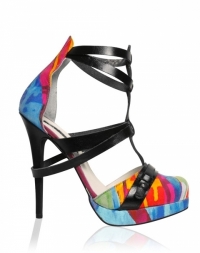


New season accessories sneak into our wardrobe in order to perk things up a bit. The Ana Locking Winter 2010/2011 shoe collection is the perfect selection of stylish stilettos and wedges to pamper out feet with some of the high class footwear of the upcoming season. Check out the artful design patterns as well as color selection to see that it is a must to have at least one pair of these shoes in your closet.
Footwear goes through numerous changes as the needs of the fashion pack evolve. Therefore talented designers as Ana Gonzalez aim to provide them with a breath-taking collection that has all that it takes to complete their accessory collection with the most visionary designs. Ana Locking is the brand that would take you into a brand new world of unique shoe designs and chromatic fantasies. The Ana Locking Fall Winter 2010/2011 shoe collection reveals a parade of stilettos and wedges for the warm season that embrace some of the key color trends from candy and neutral tones to water-color prints and more rainbow-inspired shades. Take a closer look at these architectural shoe designs that would keep all fashionista on their toes.

Shoes, shoes, shoes
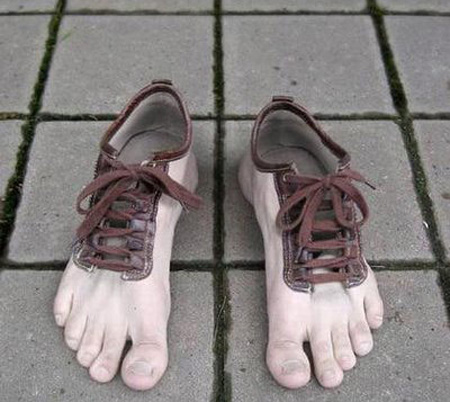
Shoe foot covering, usually of leather, consisting of a sole and a
portion above the sole called an upper. In prehistoric times skins or
hides may have been tied around the foot for protection and warmth;
studies of the foot bones of ancient humans suggest that some form of
sturdy footwear was worn by human beings beginning between 40,000 and
26,000 years ago. The shoes found with the 5,300-year-old “Ice Man” in
the Tyrolean Alps were made of skins and braided-bark netting and
stuffed with straw and moss. The sandal, a very early form of the shoe,
was worn in Egypt, Greece, and Rome; a more ancient example (c.8000
BC), woven from plant materials, was found in an Oregon cave. An early
form of the boot was also known in Greece and Rome. The characteristic
shoe of the Middle Ages was the soft, clinging moccasin, which extended
to the ankle. It was highly decorated and was of velvet, cloth of gold,
and, increasingly, of leather. By the 13th cent. the toe had become
greatly elongated until a century later the point had to be held aloft
by a chain attached to the knee. After 1377 wooden clogs, called
poulaines or pattens, were introduced. A forerunner of the heeled shoe,
they were fastened under the shoe (if not a part of the shoe itself) to
protect it from mud or water. The chopine, an ornamental shoe with a
very high sole, went to fantastic heights. After 1500, styles reversed
themselves, and the width of the toe was exaggerated; two colors and
slashing were often employed to complement the costume. The high heel
came into fashion with Elizabeth’s reign in the late 16th cent. and was
worn by both men and women; the shoe was colorfully decorated with
rosettes, lace, and embroidery. France introduced (c.1600) the high-top
boot which developed into the cavalier’s boot with its wide, floppy
top. The late 17th cent. saw the emergence of the square toe, high
tongue, and buckles. Heels were lowered, becoming the French curved
heel, until they disappeared (c.1780). With the new Empire styles, flat
soft shoes with ribbon ties became the style for women, and military
boots became the vogue for men. Guilds of shoemakers or cobelers
existed in the Middle Ages; in the American colonies, the earliest
known shoemaker was Thomas Beard, who arrived in Salem, Mass., in 1629.
Early shoemakers worked at home, in small shops, or as itinerant
workers who went to homes to make up the annual supply. Hand processes
were used until c.1833; thereafter the rapid invention and development
of machinery revolutionized the industry; today over 180 different
kinds of machines are employed. As machinery became more specialized
and the use of leather became primary, shoe styles and measurements
became more refined and exact. From the high button shoe of the late
19th cent. to the low-cut pump of modern times (popular after 1920),
the range of materials has increased, and styles are designed for every
purpose and need.
Since time immemorial, shoes have been made of leather. The luxury
leather used in the finest men’s and women’s shoes is calf. The most
versatile leather, used for many kinds of shoes, is side leather, made
from cattle hide and called side because the large hide is cut down the
middle lengthwise into two sides for handling.
Kid leather, made from goatskin, is used for women’s dress shoes and men’s slippers. Sheepskin is used in linings and slippers. Reptile leathers (alligator, lizard, and snake) are used in women’s and some men’s shoes. Cordovan (a small muscle layer obtained from horsehide) is a heavy leather used in men’s shoes. Patent leather, usually made from cattle hide, is given a hard, glossy surface finish. Suede is made from any of several leathers (calf, kid, or cattle hide) by buffing the inner surface to produce a napped finish.
Materials
Though still dominant, leather is being replaced in shoes by rubber and man-made fibres and compositions, particularly for heels and other shoe components. Linings and uppers may be natural or coated fabrics. Welting, heels, and counters (heel stiffeners) may be plastic. Most inner and outer soles are now nonleather. A fabric base coated with a chemical surface finish can be made in a variety of textures and designs, many simulating the grain of leather. Synthetic patent and synthetic suede are also used in shoes. Such modern materials cost less and meet performance standards. Certain fabrics, including linen, satin, and silk, are also used in footwear.
Tell Me About Shoe Care!
Taking care of shoes ensures they last longer. The following measures are good recommendations to help prolong the life of each pair of shoes;
* Leather soled shoes should always be worn in dry conditions for the first few times. This hardens the sole and gives a rougher finish that helps to keep out water.
* Getting shoes very wet is not good for them. However, if this occurs, allow them to dry naturally, and never use direct heat. If leather soles get very wet, they will expand. Allowing them to dry out naturally and not using direct heat will help the layers from coming away or peeling back. Leather is a porous, breathable, material and is not naturally waterproof. A protector spray will help give the leather a waterproof coating.
* It is always wise to own more than one pair of shoes, as a single pair should never be worn constantly. Always try to allow them to rest for a day between wearing. Using wooden shoe tree with maintain the shape of the shoes, and help absorb internal moisture.
* Use a good polish or wax regularly to maintain the moisture levels and appearance of the shoes. Spending some time working the polish into the leather will pay back in the long term and enhance its feel and finish.
* Do not leave shoes too long between repairs, and always use a recommended quality shoe repairer. A bad repair job could ruin a good pair of shoes.
* Moccasins are intended to be a summer shoe and so not take excessive wear or water well. The nature of their construction means that there us a hidden channel groove around the sole. When the sole becomes very wet and then dries out, the leather covering the channel can peel away. This is not a fault of the shoe and can be helped by wearing the shoes in a dry condition several times first.
Shoe Returns
* All shoes should be tried on a carpeted surface before wear. All shoes must be returned in their original, undamaged shoe box (including stow bags), as this is considered part of the product. Shoes that are returned without boxes or in damaged boxes may not be accepted, and may be sent back to the customer.
DC Shoes Pure XE – Spring 08′

DC Shoes dropped a lot of hot sneakers this Spring and these new Pure XE’s are another set im liking. There are over 10 new styles of the DC Shoes Pure XE to pick from this year and personally speaking i want a couple of them myself. 12 styles total to fit the bill and instead of sitting here and listing a long list of colorways and describing different patterns for each one just check out pictures of all the new DC Shoes Pure XE designs after the jump. For the record, they are available now at select DC Shoes retailers for about $70.


Eco-friendly shoes display style and class: extend beyond tree-huggers
I don’t know if I would consider myself a ‘tree-hugger’, perhaps because the term has connotations that include tie-dyed dresses and unwashed hair, but I am environmentally aware and I do try to be as ‘green’ as possible. As a result, I tend to punt products that are vegan or made from recycled goods, or at least are made by manufacturers who use ethical production methods. That means that since reading about Bourgeois Boheme, and their eco- and animal-friendly practices, I have become a big fan.
Based in London, Bourgeois Boheme specialises in his ‘n hers environmentally-friendly fashion, including shoes, belts, scarves, gloves, wallets, purses and bags; they’ve won several PETA awards, including the 2008 PETA Proggy Award for Best Cruelty-free Online Vendor, and have been officially approved by the Vegan Society. And they have just revealed their new winter line of shoes, called “Love Goddess”. The line includes faux patent-“leather” riding boots, with extra space at the top for ladies with legs that don’t look like bits of spaghetti.

BoBo Boots
There are also funky purple wedges (which I adore), flat moccasins and office pumps, most of which have matching belts. All shoes in the Love Goddess line are made from “micro-fibre”, which is 80% biodegradable and 100% vegan-friendly. And they look fab. They’re a little pricy with styles ranging from £65 – £110, but when you think how much good goes into them, somehow that makes it all better. Love Goddess shoes are available from BoBo online, at Hydrex House in London (their first offline retail location) and can also be shipped internationally.
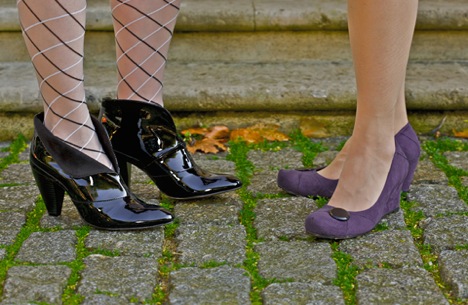
BoBo purple wedges
In other eco-friendly shoe news, Tree Hugger, the website with an eco-conscious, listed their top 5 eco-shoes, and while the Love Goddess line is too new to make the cut, there are plenty of other earth-friendly footwear manufacturers to applaud. I’ll give you my two favourites:

White Intrigue Shoes
Intrigue shoes by Earth use ‘negative heel technology’ that is supposed to improve your posture and alignment while making you feel as though you are working barefoot in the sand. This is my kind of shoe, especially as the sole is made from natural rubber sole and they stock vegan styles and the colours are uber-cool. Prices are around £90.

Pink Intrigue Shoes
Stella McCartney’s vegan boots, or, to be more exact: Stella McCartney anything. I freely confess that I am a Beatle-maniac, and that by association I am inclined to like things even remotely connected to all things Beatle. But Stella McCartney appeals to me for different reasons. One: her designs are gorgeous. Two: she has an unswerving devotion to animal friendly products and even foregoes PVC in favour of plant materials. She’s just plain cool.

Stella Wedges

